Use case

Launch Open Calls That Attract the Right Partners

Finding startups isn’t the problem. Finding the right ones is.

With Yumana’s platform and Novable’s AI-powered scouting, you attract only the most relevant startups, evaluate them efficiently, and turn the best into lasting business partners.
All in one place, under your brand.
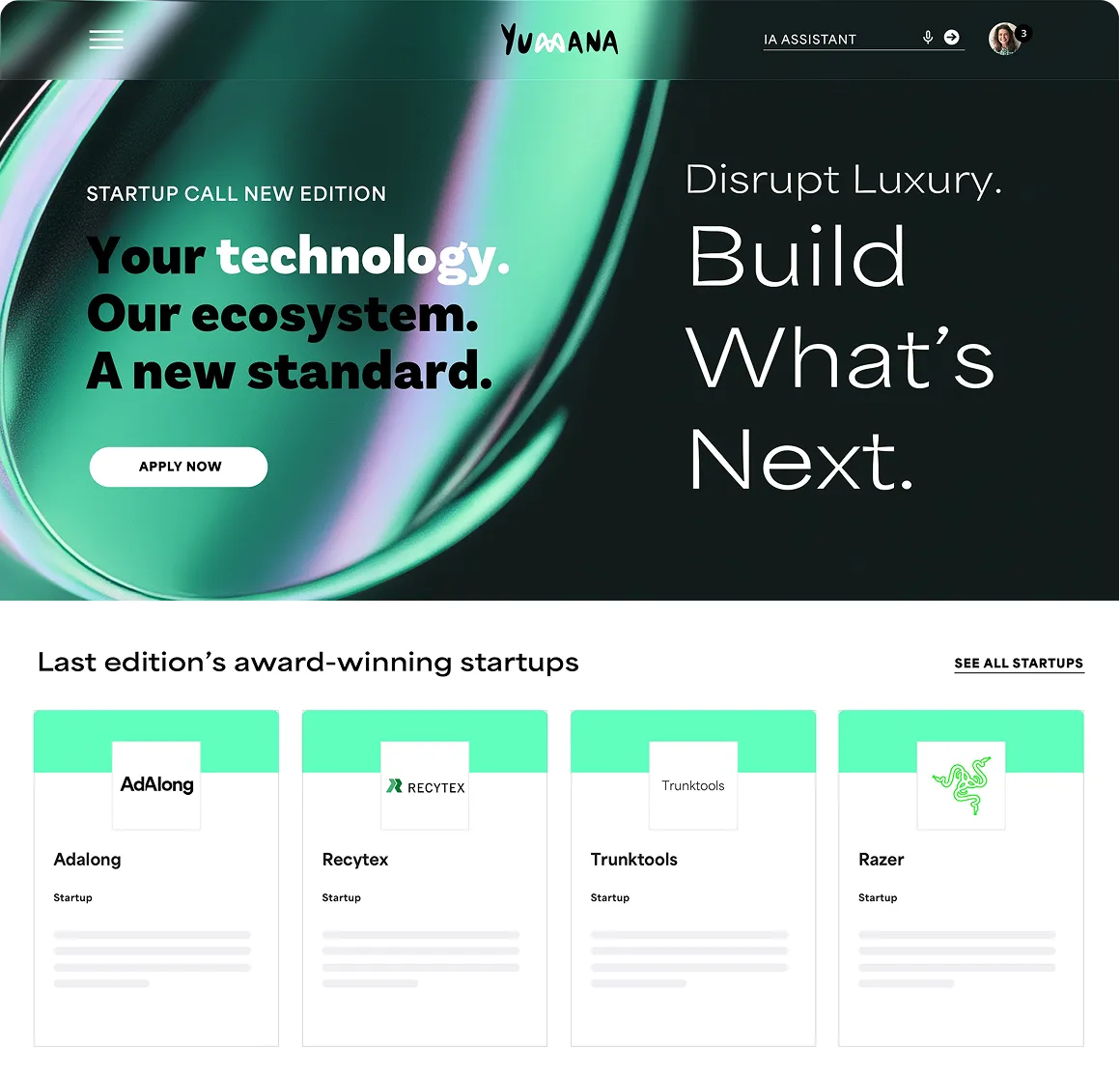
Yumana open innovation challenge inviting startups to join a corporate ecosystem and build next-generation solutions.
When your open calls attract startups but not real solutions...
It’s time to rethink how you connect with your innovation ecosystem.

Yumana helps you attract qualified startups, manage evaluations, and keep a living record of trusted partners. From challenge launch to collaboration tracking, everything stays structured, transparent, and measurable.

Organizations using Yumana attract 3× more relevant startup applications and achieve 40% higher PoC conversion rates.

When you focus on quality instead of volume, every challenge delivers stronger partnerships and faster results.

3x

more relevant applications

40%

higher PoC conversion rates

01
02
03

Why innovation teams choose Yumana

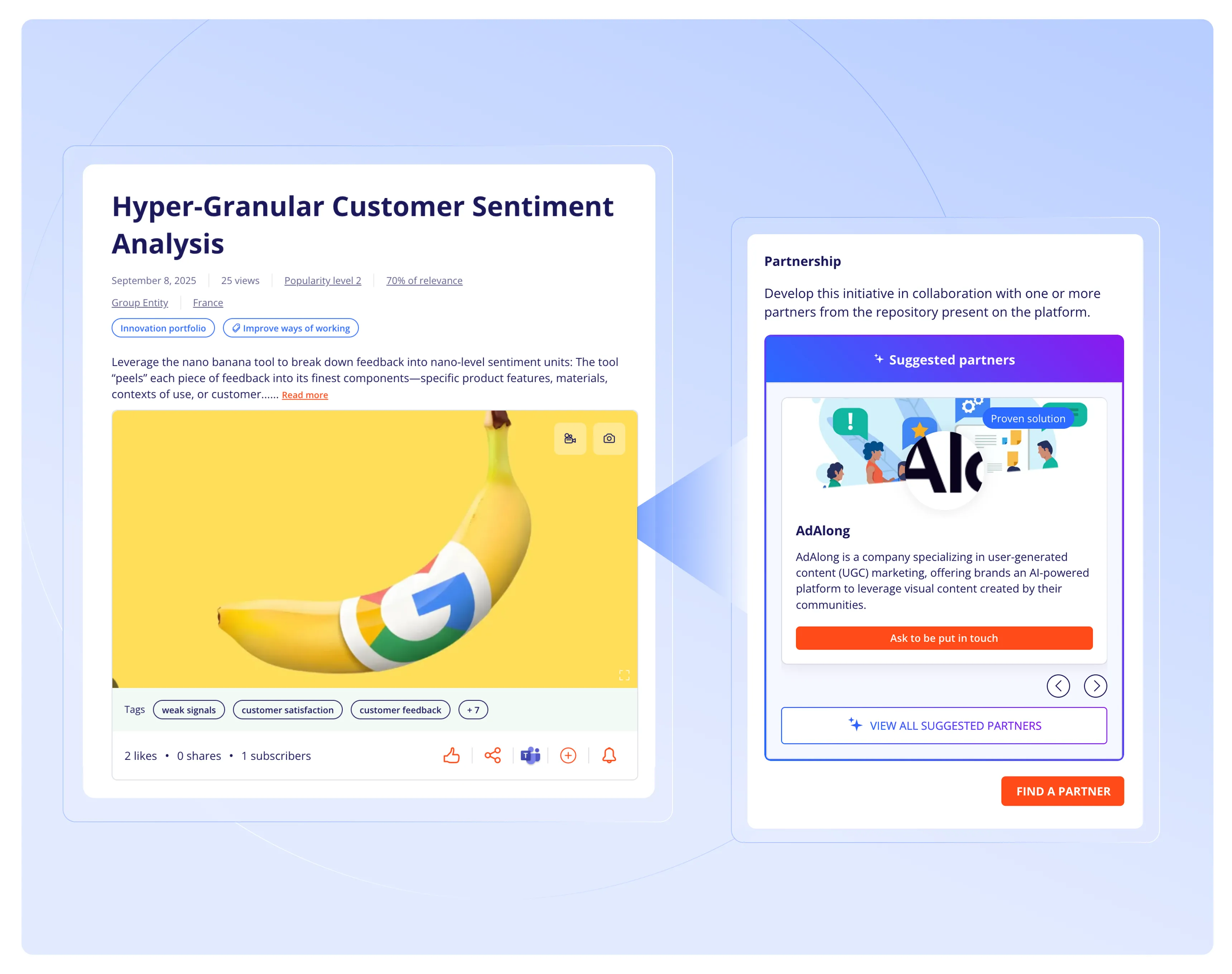
Granular semantic analysis of projects and matching with technology partners.

Target Smart. Attract the Best.

Traditional open calls attract attention, but not necessarily alignment.

Yumana’s partnership with Novable ensures that every challenge reaches the startups most capable of solving your business need.

Based on your brief, Novable’s AI and analysts scout and invite the top matches directly, raising both the quality and relevance of applications.

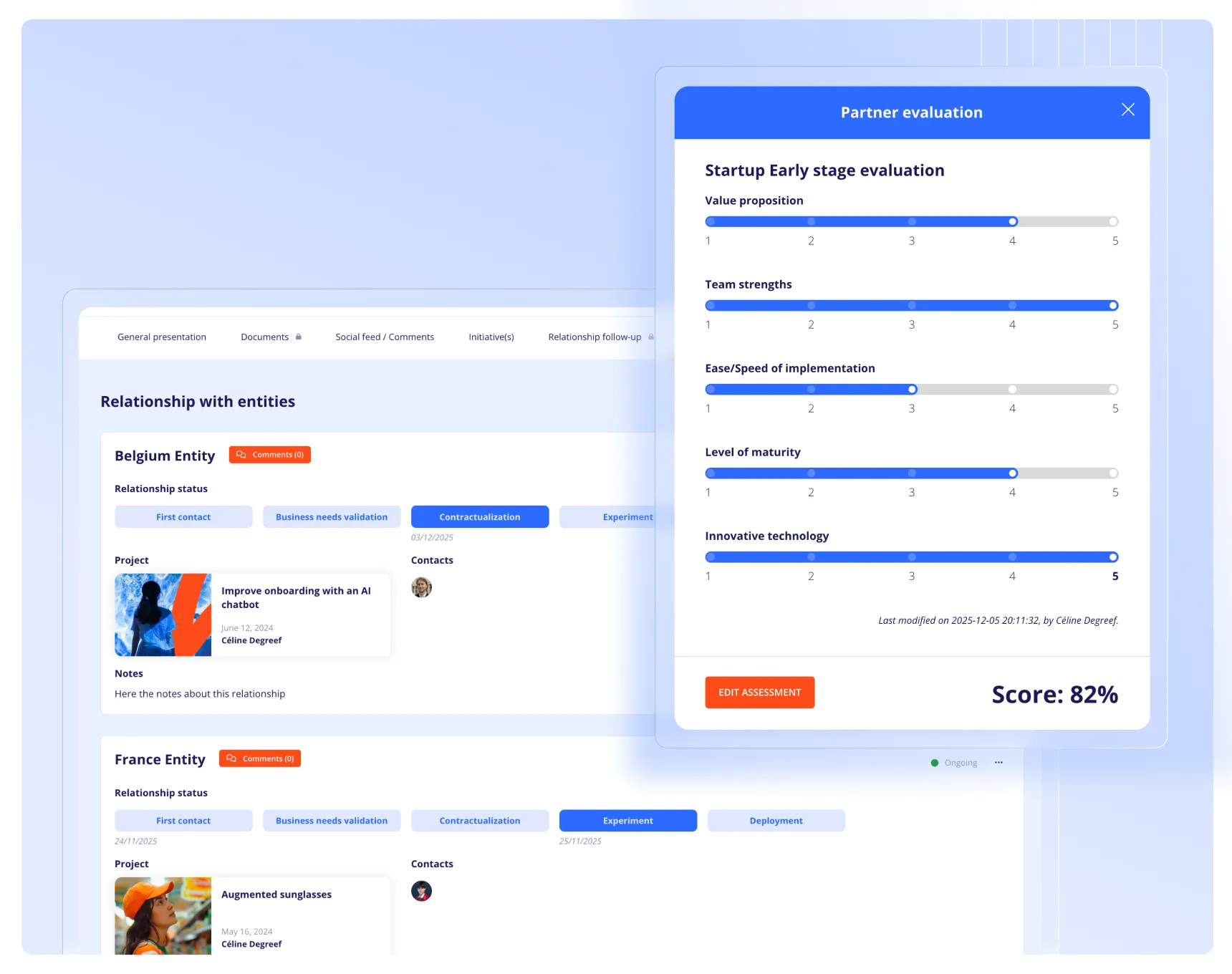
Partnership Workflow: End-to-end tracking of entity–startup relationships with maturity evaluation scorecards.

Own the Process. Shape the Experience.

Your challenge, your brand, your rules.

Yumana lets you design a fully branded and secure challenge environment, manage applications, and run evaluations through customizable scorecards and workflows.

From submission to finalist selection, every step is traceable and efficient.

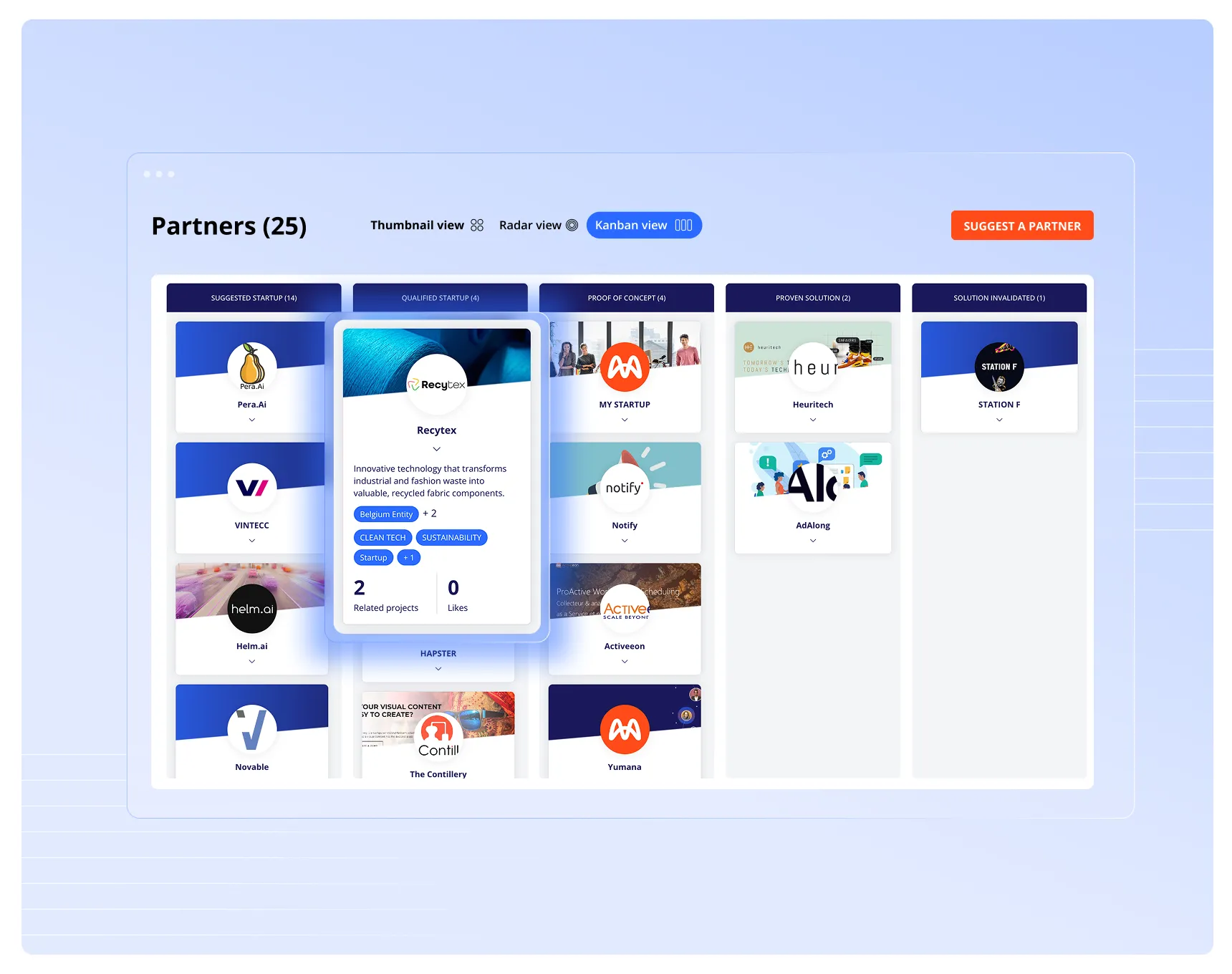
Partnership Kanban Board: Visual management of partnerships and startup portfolio.

Every Challenge Builds Your Ecosystem.

After the challenge ends, the story continues.

Vetted startups and evaluations stay in your shared repository, accessible across the organization.

Over time, you build a living portfolio of trusted partners that you can reuse, track, and engage for future projects, eliminating redundancy and accelerating collaboration.

Granular semantic analysis of projects and matching with technology partners.Partnership Workflow: End-to-end tracking of entity–startup relationships with maturity evaluation scorecards.Partnership Kanban Board: Visual management of partnerships and startup portfolio.

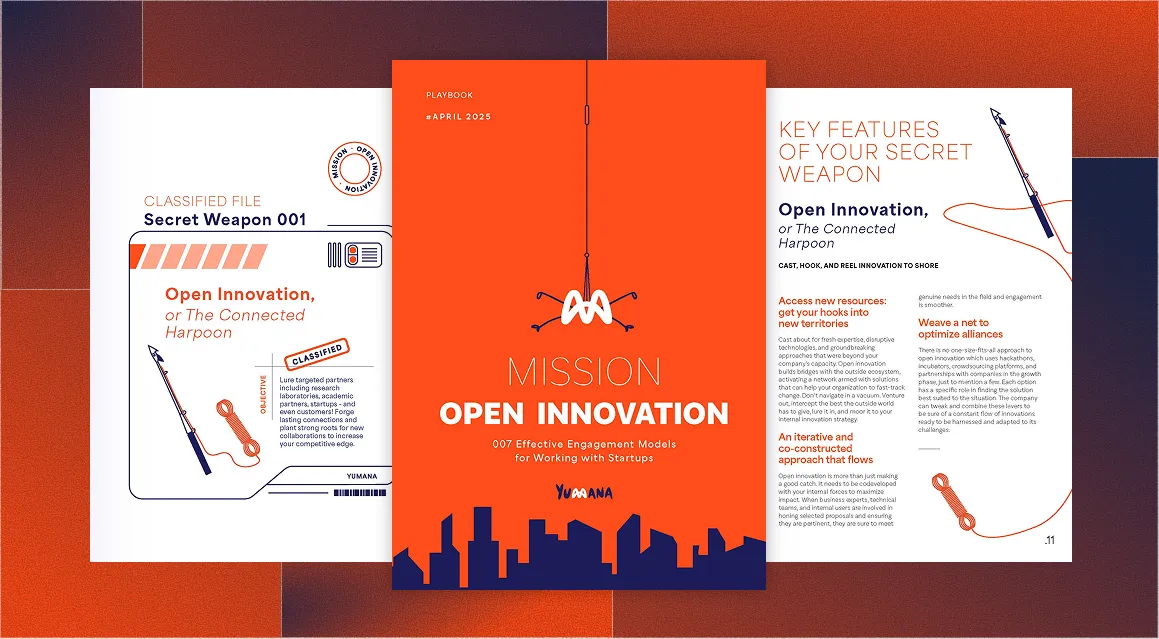
Resources to go further

What our customers say

With Yumana, every challenge brings qualified partners who match our strategic needs. We now receive applications that are far more relevant.

Philippe Metais

Strategy, R&D and
Innovation Department
GRDF

Novable is a true accelerator for innovation teams. The platform significantly reduces the time required to identify and connect with potential partners.

Julia Seignier

Innovation Project Manager
Leroy Merlin

Innovation Management

Use Cases

Frequently asked questions

How can we make sure our challenge attracts startups that truly fit our business needs?

Getting the right startups starts well before you publish your challenge. It’s all about how clearly you define, target, and communicate your business need.

Here’s what works best:

  1. Start with a clear, specific brief.
    Describe your challenge in concrete terms. Instead of saying “We’re looking for sustainable materials,” say “solutions that reduce packaging waste in cold-chain logistics.” The more precise you are, the easier it is for startups to self-qualify and for internal teams to stay aligned.
  2. Mix broad visibility with targeted outreach.
    Public promotion on your website or LinkedIn builds awareness, but most relevant startups come from targeted outreach. Yumana’s integrated smart scouting engine uses your brief to identify and invite startups that match your criteria, such as technology maturity, industry focus, geography, or readiness level. This hybrid approach increases both the volume and quality of applications.
  3. Work with trusted partners.
    Collaborate with venture builders, universities, or accelerators to validate startups and extend your reach. Sharing your challenge in curated innovation communities can also attract pre-vetted partners.
  4. Create a transparent, professional experience.
    Startups assess you as much as you assess them. A clear process with milestones, evaluation criteria, and timelines builds trust. Yumana lets you design a branded challenge page, manage applications, and run evaluations efficiently in one place.
  5. Give feedback and visibility.
    Even for startups that are not selected, constructive feedback and transparent communication build trust and reputation. This encourages future participation and reinforces your presence in the startup ecosystem.

In the end, attracting the right startups comes down to clarity, ecosystem reach, and solid execution. Yumana helps you manage the full process, from defining your brief and scouting relevant partners to evaluating and tracking collaborations, so every challenge delivers measurable innovation impact.

How can we assess startup maturity, credibility, and scalability before shortlisting?

Selecting the right startup partners is as much about strategic fit as it is about execution readiness. The best open innovation teams use both data and expert judgment to evaluate startup maturity, credibility, and scalability.

Here’s a practical approach:

  1. Define clear selection criteria.
    Translate your business need into measurable factors. Go beyond “innovative tech” and assess what really matters for collaboration success.

    Typical categories include:
    • Strategic Fit: Alignment with the company’s strategic priorities, business challenges, and technical roadmaps.
    • Solution Readiness: The maturity of the product or technology (TRL level, IP status, pilot readiness).
    • Scalability: The startup’s ability to deploy its solution across multiple sites or markets within reasonable timelines.
    • Team Capability: The founders’ experience, industry background, and operational reliability.
    • Business Model Robustness: Evidence of traction, paying clients, and financial sustainability.
    • Data & Compliance Readiness: Compatibility with corporate IT, data security standards, and regulatory frameworks.

      You can score each criterion on a weighted scale (1–5, or low/medium/high) depending on your priorities.

  2. Balance data with human insight.
    Numbers only tell part of the story. Combine funding data, patents, or client lists with expert reviews or interviews to gauge cultural fit and collaboration potential.
    Yumana helps structure this process with configurable evaluation forms, multi-reviewer scoring, and transparent dashboards.
  3. Benchmark and compare.
    When several startups look promising, side-by-side comparisons help you see which one is most scalable. Use criteria such as technology maturity, integration effort, and ROI potential.
    Yumana’s magic quadrants make it easy to visualize differences and identify the best fit quickly.

In short, combine structured evaluation with real human insight. The startups that score high on both are the ones most likely to deliver lasting business value.

How do we position the challenge to appeal to the most relevant startups and innovation partners?

A successful open innovation challenge speaks the language of startups. That means clearly defining the problem you want to solve, explaining the business context, and showing what a collaboration could look like.
Startups need to understand why your challenge matters, what’s in it for them, and how fast decisions will be made.

To attract the most relevant partners, clarity is more persuasive than hype. Use real data or examples that show you’ve already validated the problem internally, and outline the potential for pilot projects or scale-ups.

With Yumana, teams can structure the challenge page around these key elements, publish it in their own visual identity, and use analytics to track engagement.

Combined with our integrated scouting capability, this ensures that the startups who apply not only fit your brief but also see your company as a credible and desirable partner.

What type of support does Yumana offer to design and effectively run an open innovation challenge?

Yumana provides hands-on support at every stage of the process, combining methodological guidance with technical setup.

Before launch, our experts work with your team to define the challenge brief, selection criteria, and communication plan.

Once the challenge is live, we help configure workflows, evaluation forms, and scoring rules, ensuring reviewers can easily compare and select the best startups.

Beyond the launch itself, Yumana assists in post-challenge follow-up, structuring how results are tracked and integrated into your partner referential so you can build on each challenge you have launched.

In short, the support goes beyond configuration: we help you design a repeatable, scalable model for open innovation management.

Can Yumana’s solution meet the needs of a SME’s and mid-sized companies?

Yes. Yumana is fully configurable and perfectly suited for smaller organizations. It simplifies every stage of an open innovation challenge, from publishing the call to evaluating and managing applications, without requiring complex setup or large internal teams.

SMEs benefit from ready-to-use templates, integrated scouting, and flexible pricing, enabling them to run professional, branded challenges and build structured partnerships with startups easily.

Open Innovation Challenge

Ready to launch challenges that attract the right startups?