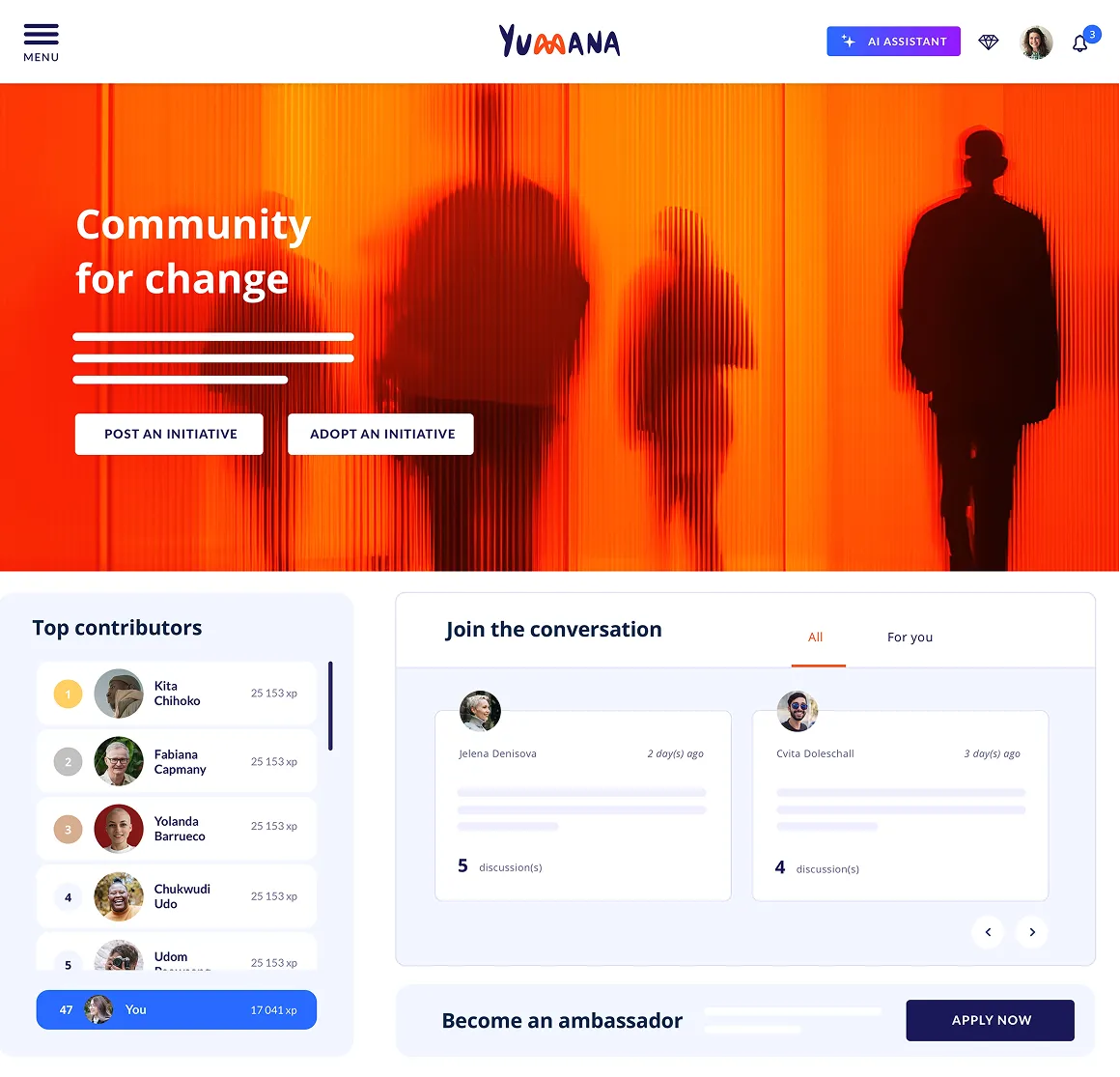
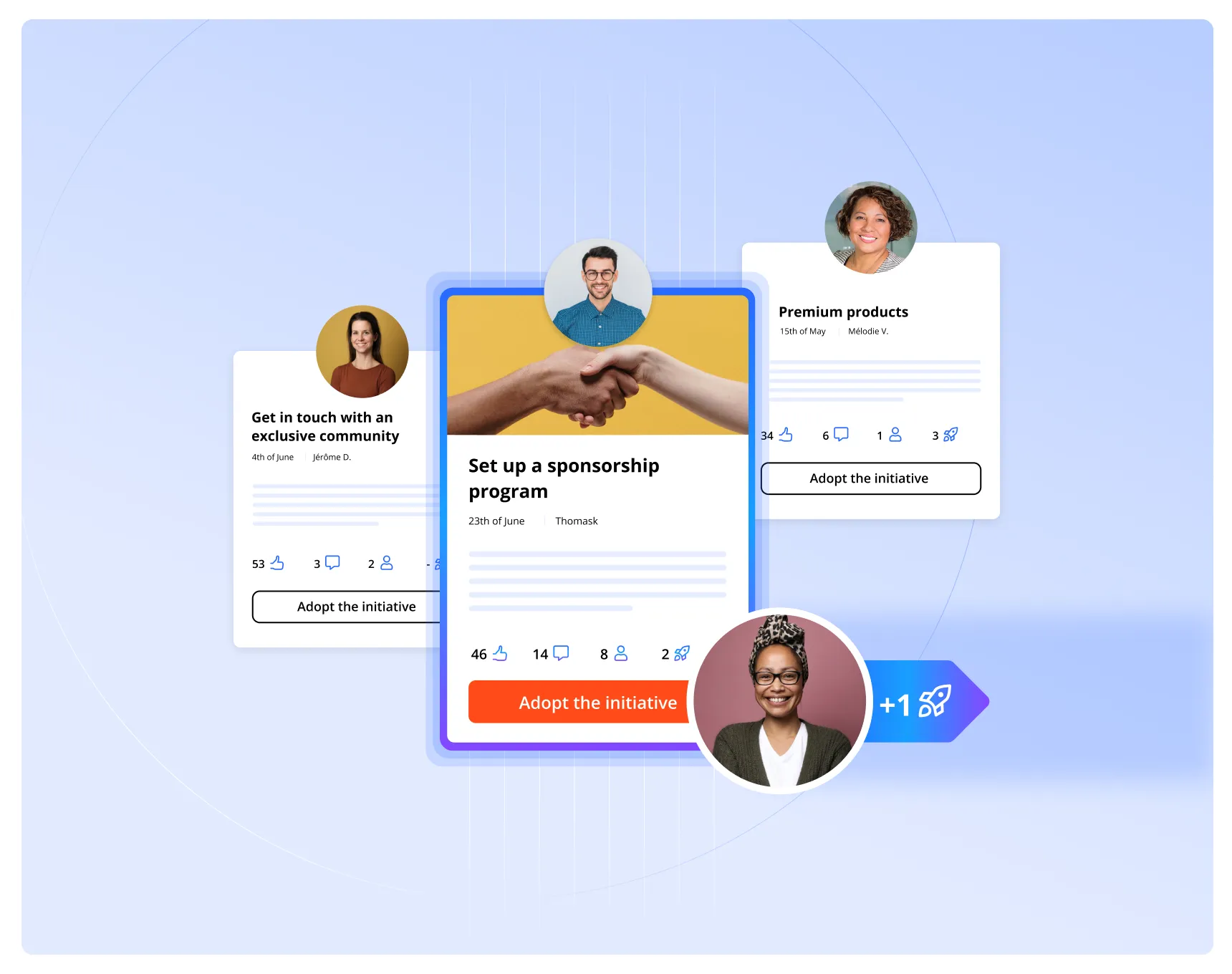
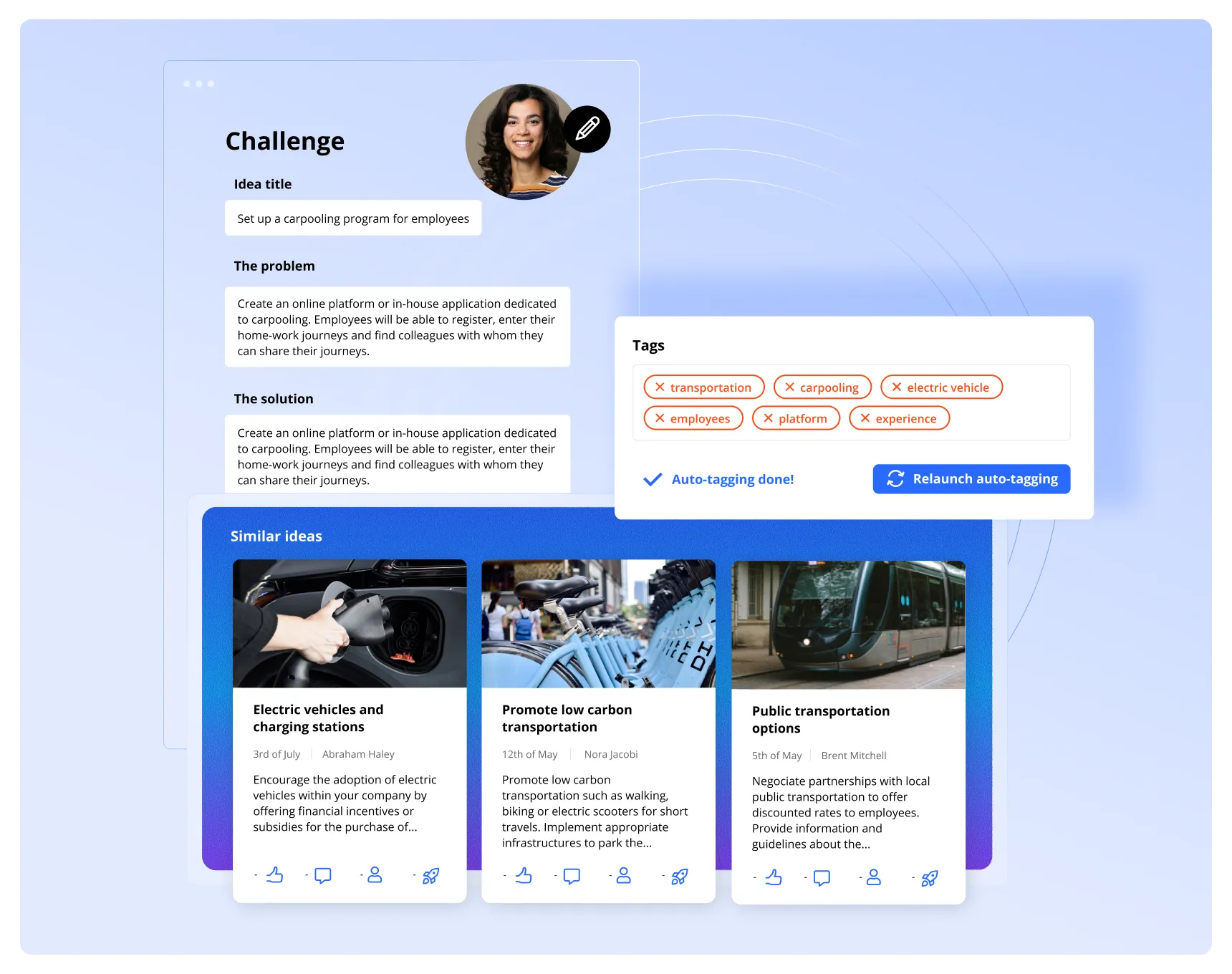
Yumana helps you turn passive networks into active communities where employees collaborate, share best practices, and act on purpose-driven goals. Track real contributions, scale local initiatives, and measure engagement that delivers tangible results.
Organizations using Yumana engage 3× more participants than any other platform, with 45% of users actively contributing.
That’s what happens when HR leaders move beyond enterprise social networks and build real communities of action.
more participants
users actively contributing
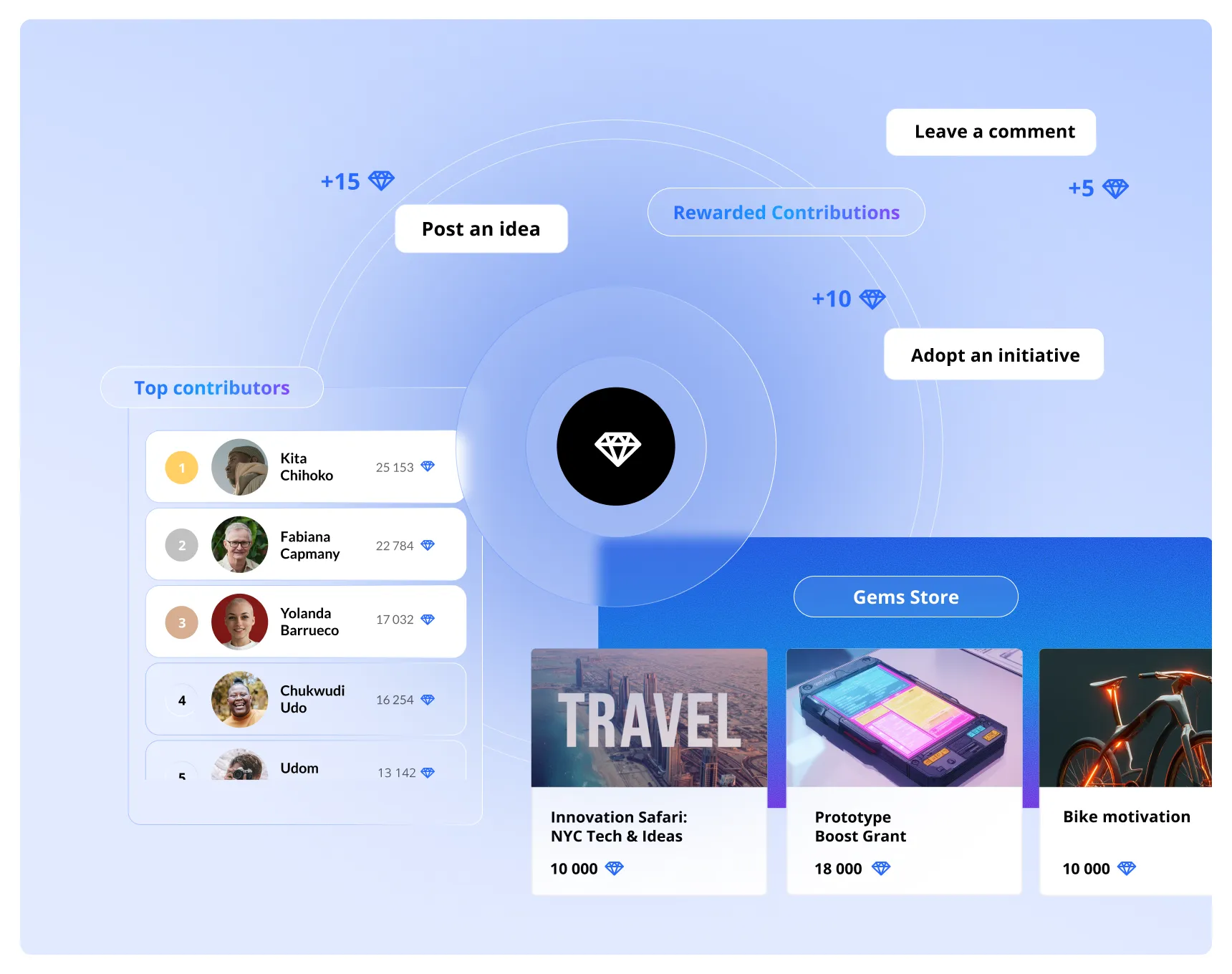
Community success depends on local ownership. Yumana helps HR teams identify and empower champions that are credible, trusted employees who embody company values and inspire others to act. Through champion networks, recognition badges, and gamified challenges, you can spotlight contributors who drive participation and make progress visible across teams.
Managers and leaders can also co-lead programs with dedicated spaces to share success stories, host discussions, and launch local actions. With dashboards and activity insights, they can track engagement in their teams and celebrate achievements, turning leadership into active facilitation.
Yumana helps you design purpose-driven communities that align directly with your HR and ESG priorities. Each community space can be themed: for example, wellbeing, inclusion, sustainability, or employee experience.
The platform includes discussion forums, challenges, learning playlists, and recognition spaces to animate the topic. You can define goals and KPIs for each theme, gather employee ideas or success stories, and track adoption of actions or best practices.
This structure ensures every community is not just social but operationally connected to your HR roadmap and measurable outcomes.
Adoption is built on relevance, simplicity, and recognition. Yumana is designed to make participation effortless, with single sign-on, Microsoft 365 integration, and intuitive contribution flows that remove friction from daily use. Playlists and interactive content paths guide employees through curated experiences that match their interests or business priorities, while gamification and visible recognition keep motivation high.
Beyond initial excitement, targeted newsletters, community highlights, and champion stories sustain engagement, while real-time analytics allow HR teams to monitor activity and adjust communication strategies to maintain momentum over time.
Yumana provides end-to-end support, from strategic framing to platform adoption. Before configuration, our experts work with your team to define the community engagement strategy, governance model, and activation plan that align with your HR objectives.
Once the vision is clear, we handle the technical setup, customization, and onboarding, ensuring a seamless rollout across geographies.
We also help your internal ambassadors and moderators master community animation and engagement mechanics so they can sustain participation autonomously. From launch to expansion, you get a dedicated success manager, analytics reviews, and best-practice guidance to ensure your program scales with measurable impact.
Viva Engage is excellent for top-down communication and social connection, but when your goal is to mobilize people around action, measure contribution, and scale engagement, it reaches its limits. HR leaders typically move to Yumana when they need structure, accountability, and impact visibility across communities.
Yumana complements your existing Microsoft ecosystem rather than replacing it. While Viva Engage keeps conversation flowing, Yumana turns that energy into measurable outcomes, with challenges, guided participation paths, recognition systems, and analytics that track who’s contributing, what’s being achieved, and how each initiative supports strategic priorities like wellbeing, inclusion, or culture transformation.
If your HR communities are active but you can’t quantify engagement or connect it to results, that’s the moment to evolve.
Absolutely. Yumana supports multiple languages natively, making it easy for teams in different countries to contribute and access best practices in their preferred language. This improves engagement, reduces miscommunication, and makes global sharing of local improvements much more effective.