Blog
3 MINS
Each pillar of David Rock’s SCARF model corresponds to a specific psychological need. Understanding these needs makes it possible to design work environments that foster motivation, trust, and performance, to effectively engage communities.

Status
Profiles driven by this need seek recognition and a sense of importance within the organization. They aspire to be valued, appreciated, and to stand out.
Every challenge is an opportunity to activate their competitive drive and their need for recognition. To motivate them, offer challenges where they can demonstrate their strengths and push their limits: the experience should be gamified, and achievements clearly scored. Their successes must be visible and celebrated to sustain engagement.
Your platform or initiative should therefore include gamification mechanisms to highlight the involvement of the most active participants. It should reinforce their desire to play by giving them opportunities to be showcased among peers, to take part in team or individual challenges, to be rewarded for every action, and to see their level of involvement reflected through rankings.

Certainty
Profiles motivated by certainty seek a clear understanding of their role within the organization, as well as of objectives, processes, and expectations. They want to anticipate what will happen, know exactly what is expected of them, and foresee the potential consequences of their actions.
They value clarity and precision. They need to know exactly what is required, to predict each step of the mission, and to follow explicit rules. These profiles excel in well-structured plans and flawless execution. To motivate them, provide clear guidelines: clarity and certainty are their secret weapons.
Communicate expectations, vision, and key steps of the initiative upfront. These individuals need to clearly identify what they will gain, the rules of participation, and its implications. Highly detail-oriented, they will not engage unless their stress is reduced in advance, especially when facing a new initiative that could make them feel at risk.

Autonomy
This need reflects the desire to control one’s daily work, to have freedom of choice within one’s scope of action, and to grow and develop within the organization. Individuals value independence, prefer making their own decisions, and reject constraints imposed by group norms.
They dislike being told what to do and constantly seek challenges that allow them to demonstrate autonomy and competence. Allergic to overly rigid instructions, they prefer to carve out their own path. Motivated and proactive, they require a high level of flexibility and freedom to engage—often on an individual basis, according to their own rules.
Give them a goal and let them choose the method. They will thrive in environments where they have full ownership and where their independence is recognized and valued.

Relatedness
This need is based on the ability to build mutual trust with colleagues and to belong to a group where success—or failure—is shared collectively. These profiles value connections with others and seek meaningful conversations and genuine interest from their peers.
They are motivated by bringing people together and by engaging in causes that go beyond the game itself, allowing them to experience true collaboration. Their commitment is strongest when they can see the positive impact of their actions on others and on the community as a whole. They need to feel surrounded, to belong to a collective, and to build lasting, cross-functional relationships.
Offer them opportunities to create bridges and new horizontal or vertical connections, to expand their network, connect with others, and increase their influence. They are particularly sensitive to feeling part of a community united by shared aspirations. Your initiative must therefore integrate a strong social dimension that encourages interaction and exchange.
Fairness
This need is centered on the perception of fair treatment. These individuals value transparency and respect for established rules, and they do not tolerate any form of discrimination.
They care deeply about equal rules for everyone, fair representation of all voices, and transparent distribution of rewards. To motivate them, implement clear structures that promote fairness throughout the initiative and ensure a fair-play approach. If they sense that the rules are not respected, they can quickly become detractors.
Give everyone equal opportunities to get involved, without any form of discrimination. Participation rules must be clear from the outset and as inclusive as possible to encourage their engagement.
Now you know everything about them, and how to win them over.
But how do you activate them?
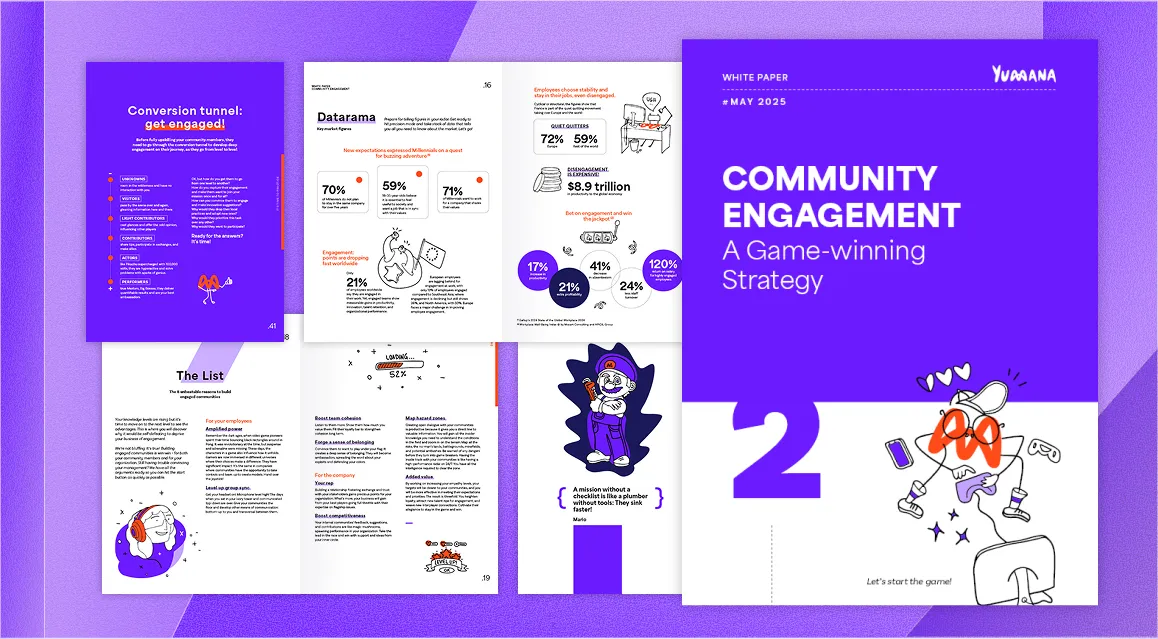
It’s time to introduce the famous conversion funnel: an overview of the different stages participants must go through if you truly want to engage them…
Learn more about it in Yumana's 2nd White Paper: Community Engagement

CEO & Co-Founder