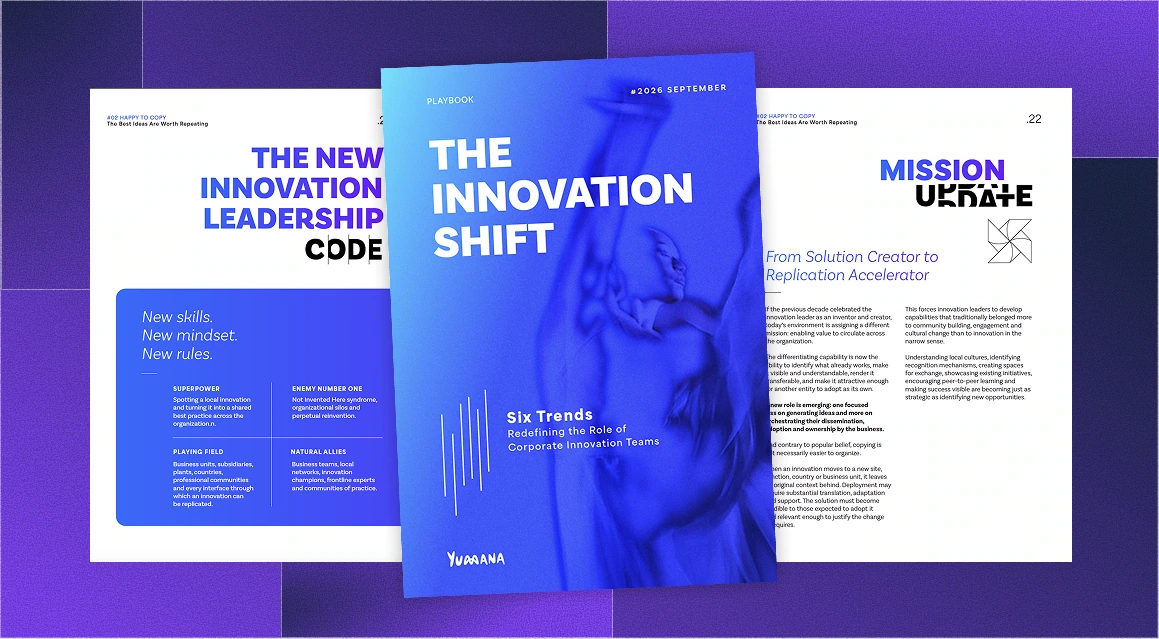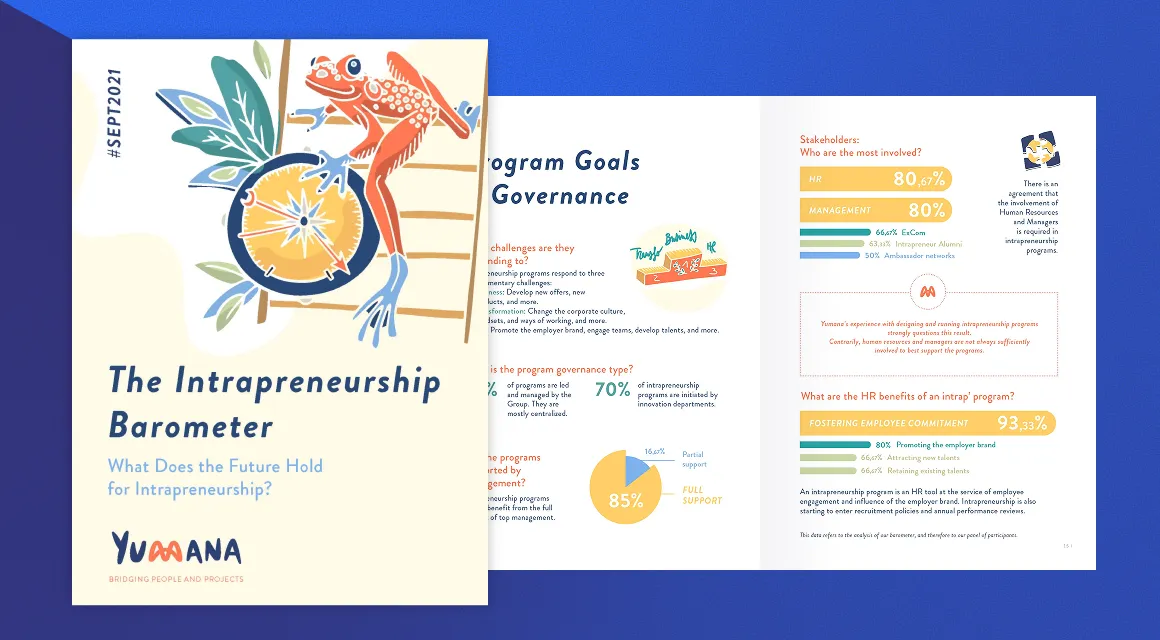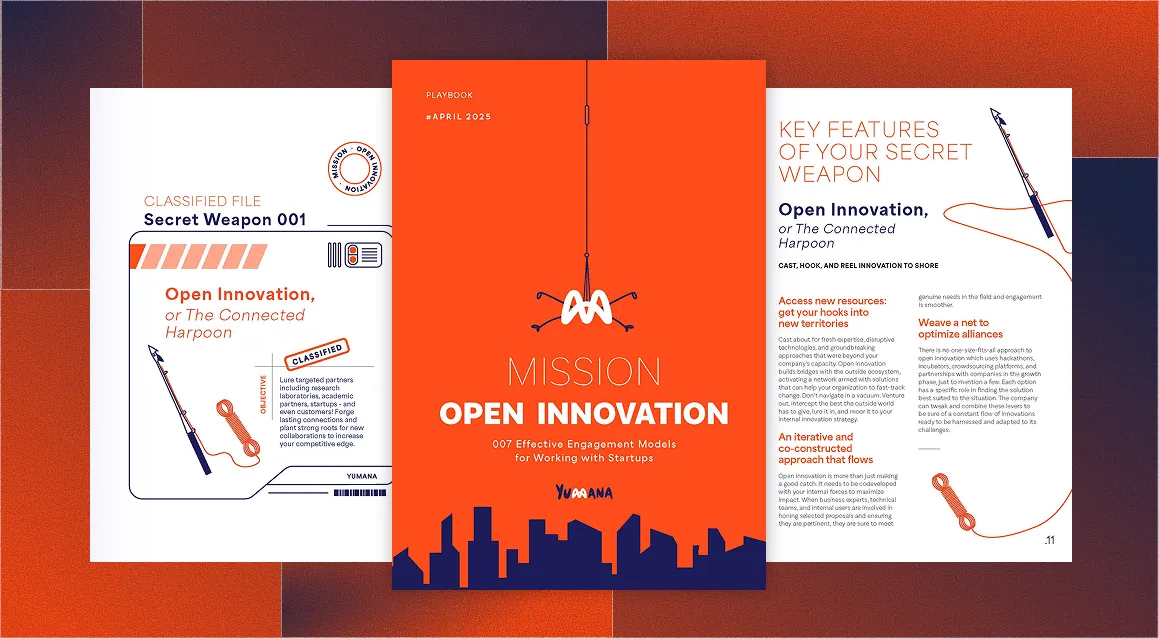
Guide
Available for download!
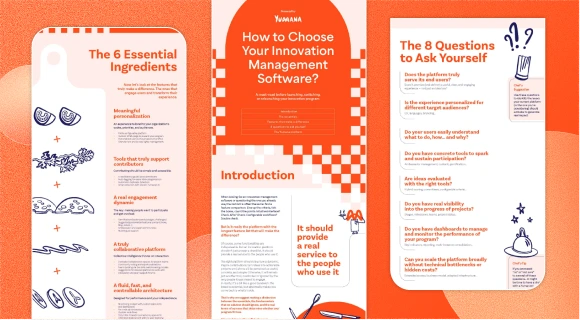
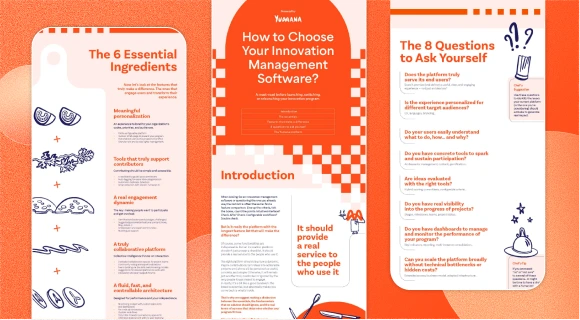
The guide to choosing your innovation management platform
The essential capabilities, the six factors that matter most and the eight questions to ask before you decide.
A practical checklist to share with your team before your next vendor review.
Download the PDFChoosing innovation management software is about more than finding a platform with the longest feature list. AI assistants, automated workflows, dashboards, integrations, gamification: these capabilities matter, but having them does not automatically make an innovation program successful.
The right innovation management platform should help people contribute, move promising ideas toward implementation, and give innovation leaders the visibility they need to make better decisions. Just as importantly, the technology needs to be backed by a clear methodology and the right expertise.
So which capabilities should every innovation platform provide? What separates a useful tool from one that actually supports your innovation goals? And what should you ask before adopting a new solution or replacing an existing one?
What Should an Innovation Management Software Actually Do?
Innovation management platform: what are we talking about?
A digital solution that helps organizations collect, organize, evaluate, and manage innovation initiatives, from the first idea through project development and implementation.

But collecting ideas is only the beginning.
Employees need to understand how to participate and what happens after they contribute. Innovation teams need a structured way to identify promising initiatives and move them forward. And leadership needs reliable information to assess progress and make decisions.
That is what separates a digital suggestion box from a platform built to manage an end-to-end innovation program.
Digital suggestion box or innovation management platform?
| Criterion | Digital suggestion box | Innovation management platform |
|---|---|---|
| Scope | Collects proposals | Manages the full innovation process, from the first idea to implementation |
| Employees | Submit an idea, often in isolation |
|
| Evaluation | Little or no structure | Configurable criteria, community voting and expert reviews |
| Tracking and steering | A list of submissions |
|
This broader approach is central to building an effective corporate innovation program, where employee participation is supported by clear processes, decision-making structures, and a long-term commitment to turning ideas into results.
A feature-rich tool can still leave people confused about what to do next. A well-designed platform makes each step easier, whether someone is submitting an idea, evaluating a proposal, building a team, or monitoring an innovation portfolio.
The question is not how many features a platform offers. It is whether those features help your people and your programs achieve something meaningful.
8 Essential Features Every IMS Should Have
Before exploring advanced capabilities, make sure the fundamentals are covered. These eight features provide the foundation for a secure, usable, and well-managed innovation program.
1. An intuitive user experience
Submitting an idea, exploring initiatives and finding information should feel straightforward, for occasional contributors as much as for daily administrators.
2. Integration with existing systems
SSO, CRM and HR connections, APIs and dedicated integrations keep information flowing without adding another disconnected tool.
3. Workflow automation
Notifications, status updates and routine workflows cut admin work. Everyone knows when action is needed, without manual follow-ups.
4. Core collaboration tools
Comments, reactions and sharing let people discuss and build on ideas. A good idea management platform helps develop contributions, not just collect them.
5. Operational reporting
Accessible dashboards on contributions, participation, campaign results and initiative progress.
6. Security and data protection
Secure authentication, permission management, controlled access and data protection, with GDPR compliance checked from day one.
7. Restricted collaboration spaces
Private communities, dedicated project areas and controlled access for specific teams, experts or reviewers.
8. Centralized data management
A shared source of information that prevents duplication, preserves decision histories and keeps ideas and projects visible.
Together, these features establish a reliable foundation. But they are only the starting point.
What matters next is whether the platform can turn that technical foundation into meaningful participation, effective collaboration, and measurable progress.
6 Factors That Matter Beyond the Feature List
Once the essentials are covered, six additional factors can help you assess whether a platform is truly suited to your organization.
A platform that adapts to how your organization works
No two innovation programs operate in exactly the same way. An enterprise-wide employee innovation program has different requirements from a focused innovation challenge or an intrapreneurship program. Even within the same organization, business units may have different processes, participants, and decision-making structures.
That is why customization should go beyond visual branding. Look for a platform that supports configurable homepages, role-based experiences, multilingual interfaces, access permissions, and workflows tailored to different audiences.
Someone submitting an idea should not have to navigate the same interface as a project evaluator or a program administrator. A flexible platform can give each group what it needs while maintaining consistent governance across the organization.
AI that helps people do their work
AI has become a common selling point for innovation software. But its value depends on what it actually helps users accomplish.
An AI assistant can help employees clarify and develop ideas before submitting them. Automatic tagging can make contributions easier to organize, while duplicate detection helps teams identify related proposals. AI-powered analysis can also support evaluation and prioritization by helping reviewers examine initiatives more consistently.
However, effective idea selection involves more than assigning scores. A structured idea evaluation process should combine clear criteria, expert reviews, and decision-making workflows that reflect each initiative's maturity and strategic relevance.
At Yumana, Darwin AI supports idea analysis and evaluation.
The goal is not to automate judgment for its own sake, but to make contribution easier, surface useful information and support better human decisions.
When evaluating a platform, ask vendors to demonstrate these capabilities using realistic examples from your innovation program.
Built-in tools to sustain employee engagement
Launching an innovation challenge may generate an initial wave of contributions. Maintaining that momentum is a different challenge. An effective innovation management platform should help teams keep their communities active beyond the launch phase.
Gamification, challenges, badges, leaderboards, recognition mechanisms, and personalized content can encourage participation when they reflect what motivates the audience. Editorial content, program updates, videos, and featured initiatives also help employees understand what is happening and why their participation matters.
An internal network of champions and experts provides another layer of support. These individuals can promote initiatives, guide contributors, and help maintain engagement across departments or locations. For international organizations, multilingual experiences make participation more accessible across regions.
However, engagement is not just about rewards or communications. People also need feedback. When employees can see how their ideas are reviewed, developed, or implemented, the program becomes more relevant to their everyday work. Building lasting community engagement means combining thoughtful communication, recognition, community leadership, and continuous feedback throughout the program.
Collaboration that turns individual ideas into team projects
Innovation rarely happens in isolation. Ideas become stronger when people can challenge assumptions, share expertise, and work together to develop solutions. A collaborative innovation platform should therefore offer more than likes and comments.
Community voting, expert evaluations, dedicated project workspaces, and discussion forums help participants develop ideas collectively. Skills-based matchmaking can also help identify employees or partners with the expertise needed to advance an initiative, whether technical knowledge, operational experience, or commercial expertise the original contributor does not have.
This becomes especially important when running an innovation challenge. Successful programs need more than a strong launch and a high volume of submissions. They also require the right processes to evaluate contributions, build teams, and move promising ideas forward.
The goal is to create a process in which ideas can be evaluated, developed, and supported by the right people.
Flexible workflows and visibility across the innovation portfolio
An innovation platform needs to remain manageable as programs grow. More participants, additional business units, new innovation challenges, and evolving governance models can quickly make a rigid system difficult to operate.
Look for customizable workflows, accessible no-code administration, and dashboards that reflect the specific needs of program managers. Teams should be able to track project stages, milestones, evaluation outcomes, responsibilities, and decisions without rebuilding that information across multiple tools.
This is where innovation portfolio management becomes essential. A consolidated view of initiatives helps innovation leaders prioritize resources, monitor progress, and make decisions that reflect the organization's strategic objectives. Dedicated innovation performance reporting and analytics can also help teams monitor participation, submission quality, evaluation speed, and project outcomes.
Scalability is also a commercial consideration. A solution that works well for a pilot may become expensive or difficult to manage when deployed to thousands of employees. Pricing structures, user licensing, integrations, and technical requirements should all be part of the evaluation.
Expert support that goes beyond software implementation
Even the most capable platform cannot define your innovation strategy, establish governance, or build an engaged community on its own. That requires people, expertise, and a structured approach.
When choosing an innovation management vendor, look beyond onboarding and technical support. Consider whether the provider can help define program objectives, design participation and evaluation processes, activate communities, and refine the operating model over time. Workshops, governance advice, community activation, regular customer success reviews, and ongoing functional support all play a role.
At Yumana, this approach includes the SQUARE methodology (Strategize, Share, Sort, Scale), alongside expertise in collaborative innovation and community engagement.
The right partner does more than configure your platform. It helps your team make the decisions needed to turn an innovation program into a sustainable operating model.
How to Compare Innovation Management Softwares in Practice
Product demonstrations often focus on what software can do. A more useful evaluation looks at how well it handles the work your teams will actually perform.
Step 1
Start from real scenarios
Ask vendors to show how an employee submits an idea, how a reviewer identifies similar proposals, how experts evaluate contributions, and how an initiative moves into a project workflow.
Step 2
Test the administration
Assess how administrators can adapt forms, configure approval stages, manage access, and build reports without extensive technical intervention.
Step 3
Involve several profiles
Employees, program managers, IT stakeholders, and governance owners will each experience the platform differently. Their feedback can reveal issues that are easy to miss in a standard sales demo.
To help narrow your options, explore our comparison of the five leading innovation management platforms. It provides a useful starting point for assessing different solutions and the capabilities that matter most when choosing innovation software.
A successful demo should prove that the platform supports your use cases, not simply showcase everything the product can do.
8 Questions to Ask Before Choosing an IMS
Whether you are launching your first innovation program or reviewing an existing solution, these questions provide a practical way to assess your options.
- Does the platform deliver real value to its users? Is it clear, useful, and engaging, or does it simply provide a place to submit ideas?
- Can the experience be tailored to different audiences? Does it support the languages, interfaces, roles, and contribution journeys your organization requires?
- Do users understand what to do and why it matters? Can employees easily see how to contribute, what happens next, and how their participation supports the program?
- Does it provide effective community engagement tools? Can you activate champion networks, publish relevant content, and use gamification or recognition to sustain participation?
- Can ideas be evaluated through appropriate processes? Does the platform support configurable criteria, structured scoring, expert reviews, and decision-making workflows?
- Can you track how projects are progressing? Are milestones, stages, teams, decisions, and project statuses visible to the people who need them?
- Can you monitor innovation program performance? Do the dashboards provide useful indicators for engagement, activity, progress, and results across different initiatives?
- Can the platform scale without unnecessary complexity or cost? Does its technical architecture, integration model, and pricing structure support wider deployment?
If you cannot answer several of these questions confidently, it may be worth reassessing the platform you currently use or the requirements guiding your selection process.
When Should You Consider Replacing Your IMS?
Low participation, fragmented project information, limited reporting, or administrative workarounds can all indicate that a platform is no longer meeting the needs of its users.
But replacing the software should not be an automatic response. First, identify where the difficulties originate. Is the user experience too complicated? Are approval processes slowing down decisions? Do teams lack visibility into project progress? Or is the program missing the communication and community management needed to maintain participation?
Some challenges can be addressed by changing workflows, improving governance, or reactivating the community. Others point to limitations that the existing technology cannot easily resolve. Understanding that distinction helps organizations decide whether to optimize their current solution, strengthen their operating model, or invest in a new platform.
Real-world examples can help put these considerations into perspective. Monnoyeur's global innovation challenge shows how a structured platform can connect employees across locations, encourage cross-functional collaboration, and help turn participation into actionable initiatives.


Frequently Asked Questions About Innovation Management Softwares
What is the difference between an idea management tool and an innovation management software?
An idea management tool primarily helps organizations collect and organize suggestions. An innovation management platform supports a broader process, including employee engagement, collaboration, idea evaluation, project development, performance tracking, and portfolio management.
Its purpose is to help organizations move beyond idea collection toward implementation and measurable outcomes.
What features should I prioritize when choosing innovation management software?
Start with ease of use, customization, collaboration, structured evaluation, project tracking, reporting, integrations, and security.
Then assess whether the platform can sustain employee engagement, adapt to your governance model, and scale across the organization. Vendor expertise and ongoing support should also influence your decision.
Does an innovation management platform need AI?
AI can add value when it helps users develop ideas, detect duplicates, identify relevant expertise, or evaluate proposals more efficiently.
However, AI is not a substitute for effective governance, clear processes, or human judgment. Its value should be assessed against specific use cases rather than the number of AI features advertised.
How can I tell whether a platform is suitable for a large enterprise?
Enterprise innovation management software should support multiple communities, user roles, programs, languages, and governance models.
Organizations should also assess security, identity management, business system integrations, consolidated reporting, administration requirements, and the cost of deploying the platform at scale.
Choosing an Innovation Platform Means Choosing a Partner
Technology provides the foundation for an innovation program. But software alone does not create participation, collaboration, or progress. Those outcomes depend on how well the platform serves users, supports decision-making, and fits into the way the organization works.
That is why choosing innovation management software is both a technology decision and an organizational one.
At Yumana, we combine a configurable innovation management platform, AI-powered capabilities, and expert guidance to help organizations design, activate, and manage innovation programs that deliver results.
Planning to launch a new program, improve an existing one, or switch platforms?
You can also explore the Yumana platform and discuss your organization's needs with our team.
CEO & Co-Founder